Machiavelli on betrayal and loyalty
Describe what happened, or just name what is on your mind. You will get the exact passage from The Prince that fits.
Machiavelli writes about loyalty like someone who has been on the wrong end of it, which by 1513 he had: arrested and tortured on suspicion of a plot he had no part in. The Prince is cold-eyed about how people behave once their interests shift, and about what that means for anyone who has to depend on them. Describe what happened above to find the passage that speaks to it.
Why promises break
A wise ruler, Machiavelli argues, cannot and should not keep his word when keeping it works against him and the reasons he gave it are gone. He is not praising treachery; he is describing how often other people will reason exactly this way about their promises to you. He points, drily, to a prince of his own day who preached nothing but peace and good faith and was the enemy of both. The lesson is to watch what people protect, not what they profess.
Be the fox that sees the trap
His famous answer to a world of broken faith is to carry two natures: the lion to frighten off wolves, the fox to recognize the snares. The fox half is the one that matters here. If you cannot be deceived, you do not have to be ruthless about it, because you saw it coming. Most betrayals, he implies, succeed on the target's refusal to believe they are possible.
Betrayal cuts both ways
Machiavelli is also clear that the conspirator lives in fear, before the act and after, because once the deed is done the people become his enemy and he has nowhere to run. It is a strangely steadying observation. The person plotting against you is not operating from strength; they are operating from fear, and fear makes people careless.
Notable lines on betrayal
A wise lord cannot, nor ought he to, keep faith when such observance may be turned against him, and when the reasons that caused him to pledge it exist no longer.
One prince of the present time, whom it is not well to name, never preaches anything else but peace and good faith, and to both he is most hostile, and either, if he had kept it, would have deprived him of reputation and kingdom many a time.
It is necessary to be a fox to discover the snares and a lion to terrify the wolves.
For whereas in general the conspirator has to fear before the execution of his plot, in this case he has also to fear the sequel to the crime; because on account of it he has the people for an enemy, and thus cannot hope for any escape.
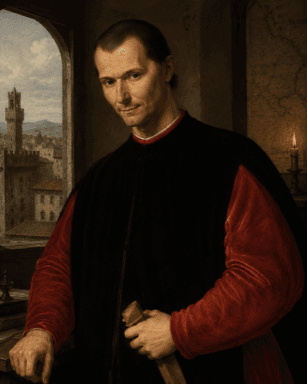
Bring it to Machiavelli directly
The quote is the start. Tell Machiavelli what is actually going on and get his read on it, in a real conversation.
Speak with Machiavelli