Is it better to be feared or loved?
Bring your situation, or just name what is on your mind. You will get the exact passage from The Prince that speaks to it.
This is the line he is remembered for, and the one most often flattened into a bumper sticker. Asked whether a ruler is better off loved or feared, Machiavelli does not say love counts for nothing. He says it cannot be relied on. What he actually wrote, and the argument underneath it, is sharper and stranger than the quote suggests. Name your situation above to pull the passage that fits yours.
What he actually said
His real answer is that you would want both, and that since the two rarely sit together in one person, fear is the safer one to keep if you are forced to choose. Note the framing: it is a fallback, not an ideal. He is not advising you to make people afraid. He is observing which bond survives when things get difficult, and concluding that affection is the first to go.
Why love is the weaker bond
The reasoning is unsentimental. Love, he writes, is held by a chain of obligation that people break the instant it serves them, because men are, in his words, self-interested. Fear holds through a dread of consequences that does not depend on anyone's mood. Strip away the cynicism and there is a real observation left: goodwill you have not made costly to abandon is goodwill you cannot count on.
Feared, but never hated
The caveat is the part the famous quote drops, and it changes everything. Fear is useful only as long as it does not curdle into hatred, and the fastest way to be hated, he warns, is to touch what people own. Men sooner forget the death of a father than the loss of their inheritance. The whole doctrine has a guardrail: be feared if you must, but never make yourself worth destroying.
Notable lines on fear
It is much safer to be feared than loved, when, of the two, either must be dispensed with.
Love is preserved by the link of obligation which, owing to the baseness of men, is broken at every opportunity for their advantage; but fear preserves you by a dread of punishment which never fails.
A prince, so long as he keeps his subjects united and loyal, ought not to mind the reproach of cruelty.
Men more quickly forget the death of their father than the loss of their patrimony.
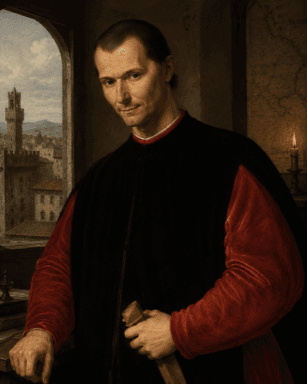
Bring it to Machiavelli directly
The quote is the start. Tell Machiavelli what is actually going on and get his read on it, in a real conversation.
Speak with Machiavelli