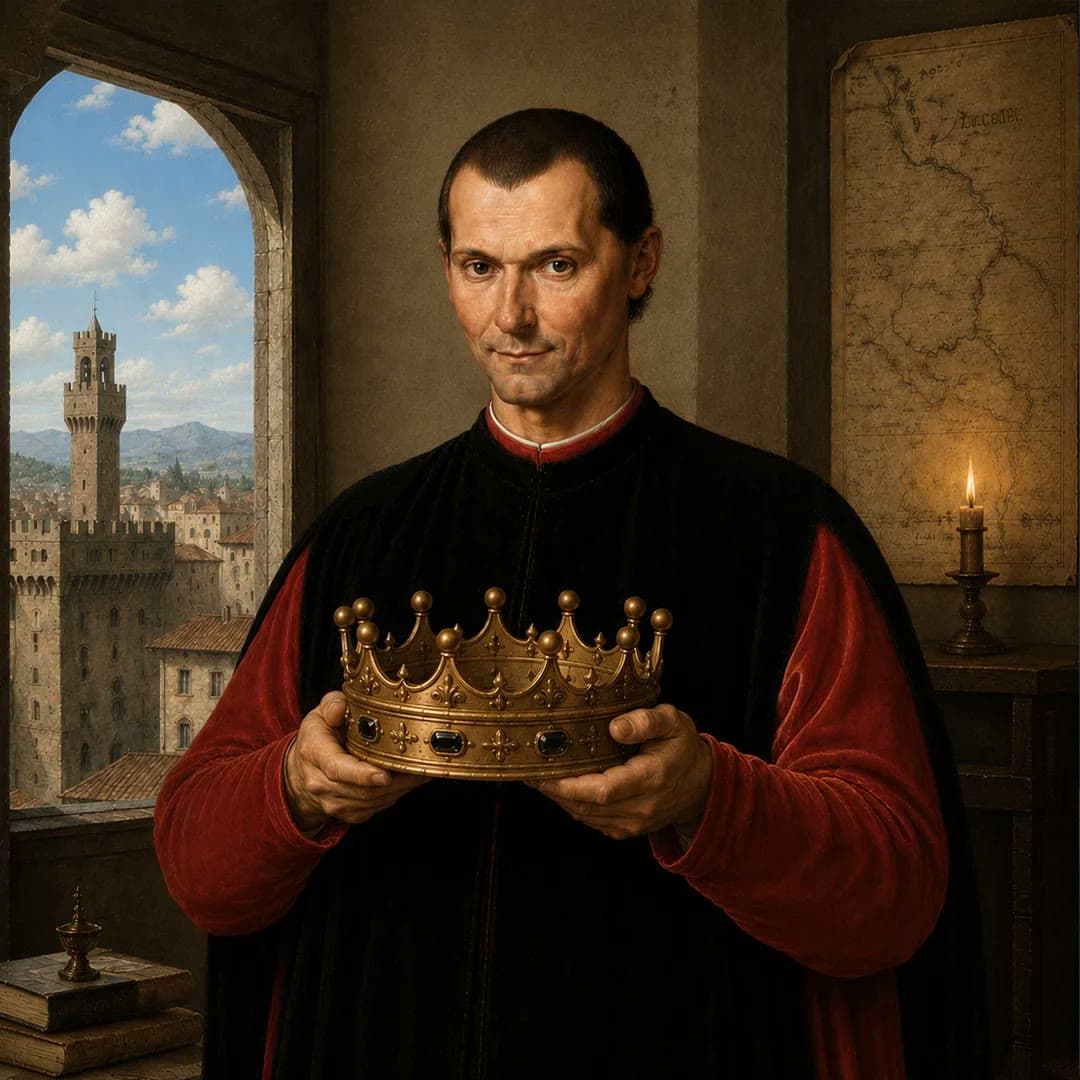
Feared or loved? Marcus says wanting to be feared is weak
It is the oldest question in power. Should the people under you fear you or love you? A manager, a parent, a founder, anyone with something to protect eventually lands on it, usually right after getting burned for guessing wrong.
Niccolo Machiavelli gave the answer everyone still quotes, five hundred years ago. So we put the question to him again, and to four other minds who lived close to power and saw what it does. They do not line up the way you would expect. Four of the five think the famous answer is a trap.
Machiavelli makes the case for fear
Machiavelli wrote The Prince for rulers trying to survive a world of shifting loyalty, where the soft prince ended up dead and his people worse off under whoever replaced him. His logic is cold but hard to wave away. Love is something other people grant you on their terms, and they can take it back the moment it costs them something. Fear, he argues, is the one lever that stays in your hand. This is the line the whole question is famous for, and it is the bait the other four are about to refuse.

Feared. Every prince who chose to be loved was buried by the people he spared. Men love you as they please, and fear you as you please. Their love is a chain they break the moment it binds them. Their fear is the one chain you hold.
Jesus says fear means you have already lost
Jesus answers from the other end of power, not the throne but the people standing under it. To him, reaching for fear is not a strategy at all, it is an admission that you already expect to be left. Rule by fear and you spend your life surrounded by people quietly waiting for you to slip. Love is the only thing that outlasts the person who carried it, he says, and also the most expensive, because it can never be ordered into existence, only given.

To want to be feared is to have already lost. Fear surrounds you with people quietly waiting for you to fall. Only love outlives the one who carried it. But it cannot be demanded, only given, and the giving will cost you every wall you hide behind.
Sun Tzu says do not let them read you at all
The strategist throws out the question's framing. To Sun Tzu both fear and love are signals, and any signal an opponent can read becomes a handle they can grab. The feared leader is studied for the day his grip loosens. The loved one is leaned on until he buckles. His answer is not a third feeling but the absence of one. Be unreadable, and there is no ground for anyone to stand on to move you.

Fear and love are both things a man can see in you, and what he sees, he can use. The feared are watched for the day they weaken. The loved are leaned on until they break. Be neither. Be the one they cannot read, and no enemy finds the ground to move you.
Marcus Aurelius says the wish to be feared is weakness
Marcus is the one voice here who actually held absolute power and used it for two decades. That is what gives his answer its weight: he tried fear, and found it hollow. An emperor can make an empire obey, but obedience bought with fear is not loyalty, and the men who fear you will not grieve you. His counter is quietly radical for a ruler. Wanting to be feared is itself a kind of cowardice, the move of a man who doubts he is worth following.
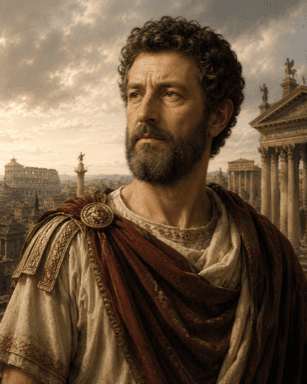
The wish to be feared is the wish of a frightened man. I have ruled both ways. Fear bought me obedient men who would not weep at my grave. Be just instead, and the few who matter will love you, and the rest will not trouble you. That is enough.
Nietzsche says the question itself is the trap
Nietzsche does what he always does and turns the question back on the person asking it. To him the man desperate to be feared and the man desperate to be loved are not opposites, they are the same person, both holding out a cup and begging the crowd to fill it. The real weakness is needing the crowd's verdict at all. It is the hardest answer of the five, because it leaves you no comfortable side to pick.

Both answers are confessions. The man who needs to be feared and the man who needs to be loved are the same beggar, holding a cup out for the crowd to fill. Stop needing their verdict. Become the one man whose own judgment can still wound him.
How to actually answer it for yourself
Strip away the theatre and a pattern shows. Only Machiavelli truly defends fear, and even he frames it as control, not cruelty. The other four are quietly answering a different question, not which feeling to chase, but why you need a feeling from them at all.
If you are sitting with a version of this, these tend to cut to it:
- Do I want respect, or do I just want to stop feeling exposed?
- Would the people around me still show up if I held no power over them?
- Am I reaching for fear because it works, or because it is easier than being known?
- Whose opinion in this am I actually unable to put down?
So who is right
Machiavelli would call the other four naive. Marcus, who outranked every one of them, would call Machiavelli frightened. The honest read is that each is answering a different question under the same five words: how to hold power, how to be remembered, how to stay safe, how to stop needing the room at all.
Put your real situation to any of them on Tyme, the difficult colleague, the family member, the negotiation you are walking into tense. They will not agree with each other. That disagreement is what makes the answer yours.


Ask your own question
Bring a real decision, a worry, or a question you keep circling to any of the seven minds, in their own voice.
Try Tyme